

Our history
The first mills
In 1609, Duke Johan of Östergötland laid the foundation for Holmens Bruk in Norrköping by building a weapons factory on the island of Kvarnholmen in the river Strömmen. The name “Holmen”, meaning small island in Swedish, reflects these origins. In 1633, Louis de Geer, known as the father of Swedish industry, established a handmade-paper mill nearby. It produced writing and cartridge paper, but burned down after ten years and was never rebuilt.
Industrial shifts and new beginnings
After the paper mill’s closure, Holmens Bruk focused on brass production until the late 18th century. Textiles, including woollen and cotton fabrics, became central to the business and remained so until 1970.
Meanwhile, in 1685, Isak Breant the elder received permission to establish an ironworks by the Iggesund River. Iggesunds Bruk was born, a site that would later become key to Holmen’s paperboard production.
Papermaking returns to Holmen
At the beginning of the 19th century, demand for paper rose rapidly. The ability to read increased among the general population, creating a greater market for books and newspapers. As a consequence, paper manufacture was resumed at Holmen when a new hand paper mill was built in 1806. The mill produced writing and printing paper, and its product range consisted of 24 different types of paper.
Mechanisation transforms production
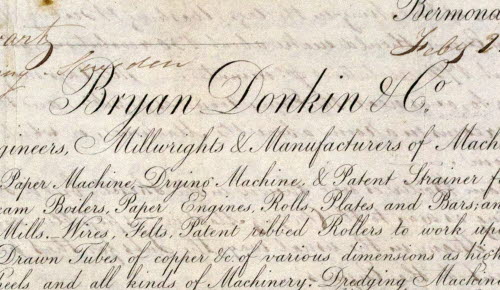
In 1836, Holmen bought the first mechanical paper machine from the British machine company Bryan Donkin & Co. The mechanisation of the production process had miraculous effects on efficiency. The production output tripled in the first year, and after two more years, production had increased more than fivefold.
History of our mills
The birth of Hallsta paper mill
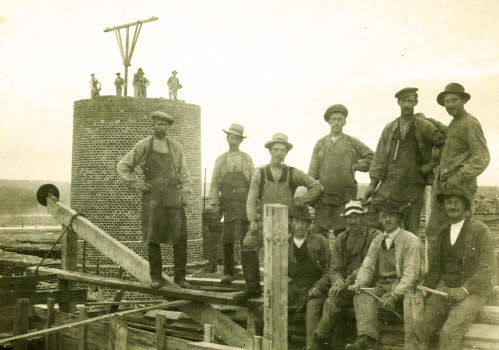
The early 1900s were a dynamic time in Europe, and the demand for newsprint was huge. Holmen was a leading manufacturer of newsprint but needed more capacity to keep growing. The industrial zone in Norrköping City had reached its limits, so a new paper mill was built in Hallstavik, 100 km north of Stockholm.
Hallstavik offered ample access to fresh water and a deep-sea port that often was free from ice. Another important aspect was that timber could be transported by sea to Hallstavik from the north of Sweden. The new mill was ready in 1916. The added capacity made Holmen the biggest manufacturer of newsprint in Sweden and one of the biggest in Europe.
From Norrköping to Braviken
To create the conditions for increasing paper production, Holmen built a brand-new paper mill in 1977. Unlike the old mill, which was located in the heart of downtown Norrköping, this mill was constructed on virgin territory beside Bråviken, a bay of the Baltic Sea. The location provided the mill with excellent logistics possibilities.
Braviken paper mill has its own deep-sea port. It also has a railway connecting to the Swedish mainline, and it is located just minutes away from a big freeway. The fresh water supply was solved by blasting a 9 km long tunnel 80 metres below the city. The water could then be led from the stream Motala Ström in the city centre to the newly constructed mill.
From ironworks to Iggesund Mill
Iggesund Mill traces its roots back to 1685, when permission was granted to establish an ironworks by the Iggesund River. In 1771, the mill acquired Östanå Paper Mill, marking the beginning of its journey into fibre-based production.
Nearly two centuries later, in 1963, the first paperboard machine was commissioned, and Invercote was introduced. Since then, the mill has developed new products and sustainable production processes, offering premium paperboard made from pure fresh fibres.
Workington Mill joins Holmen
In 1987, Holmen expanded its paperboard operations by acquiring Thames Board Ltd, including the Workington site in the United Kingdom. The mill became a key part of the business, producing Incada, a folding box board made from fresh fibre. In 2001, the Incada name was introduced to unify the product family. Workington Mill continues to play a crucial role in Holmen’s offerings, delivering high-performance materials to customers across Europe.
The Holmen Group of today
The 1980s and 90s were a time for mergers and acquisitions for Holmen. In 1988, Holmen was acquired by MoDo, a large manufacturer of fine paper. The new company group had nine independent business areas: Forest, Wood Products, Pulp, Fine Paper, Printing Paper, Hygiene, Paperboard, Lignin, and Finance.
Refocusing the business
Ten years later, in 1999, the decision was made to focus on wood-containing printing paper and paperboard. The business areas of forest, wood products, and energy were also deemed valuable operations and were retained within the group. All other divisions were sold off. The new constellation became the Holmen Group that we know today.
Integrating paperboard
In 2000, Iggesund became part of Holmen Group, bringing with it a strong legacy in premium paperboard. Since 1963, Iggesund had been producing Invercote, a
material known for its quality, durability and design freedom. Today, Holmen's paperboard division manufactures Invercote, Incada and Inverform in two state-of-the-art mills: Iggesund Mill in Sweden and Workington Mill in the UK.
Towards a unified business area
In 2024, Holmen consolidated its paper and paperboard operations into a single business area, known as Holmen Board and Paper. The merger marked a strategic step in strengthening efficiency, competitiveness and development opportunities. By combining expertise across four production facilities in Sweden and the UK, Holmen continues to build on its legacy of innovation and sustainability in fibre-based materials.